Thinking about a move to Catalina Foothills from another state? It can be an exciting step, but it also comes with questions about climate, commute, housing options, and how one address may feel very different from the next. If you want a smoother relocation with fewer surprises, it helps to understand how this Tucson-area market really works before you start touring homes. Let’s dive in.
Catalina Foothills at a Glance
Catalina Foothills is a Tucson-area census-designated place in unincorporated Pima County with 52,401 residents spread across 41.85 square miles, according to the U.S. Census QuickFacts profile. The area has a strong ownership base, with 76.4% of housing units owner-occupied, and a median owner-occupied home value of $652,000.
For many out-of-state movers, those numbers signal a market that often appeals to professionals, retirees, and second-home buyers. The same Census profile shows 96.5% broadband subscription, a median household income of $115,304, and a well-educated population, with 71.4% of adults holding a bachelor’s degree or higher. If you want a suburban setting with strong connectivity and an established residential feel, Catalina Foothills often checks those boxes.
Catalina Foothills Is Not One Market
One of the most important things to know before relocating is that Catalina Foothills is not a single, uniform neighborhood. The Catalina Foothills Association explains that its core boundary is roughly formed by First Avenue, Hacienda del Sol, River Road, and Ina Road, and that the area is organized into Catalina Foothills Estates Areas 1 through 9.
That matters because different pockets can come with different rules, lot characteristics, and maintenance expectations. The association notes that Areas 1 through 6 may involve deed restrictions and CC&Rs, while Areas 7 through 9 are governed by individual HOAs. Those rules can affect setbacks, building height, exterior colors, architectural style, land use, and native plant protection.
If you are relocating from out of state, it is easy to assume the Foothills functions as one broad lifestyle choice. In reality, two homes with similar prices may come with very different day-to-day expectations depending on the exact location. That is why comparing specific addresses is more useful than relying on a general area name.
Why Exact Address Matters
Relocation buyers often start with online maps and neighborhood labels, but parcel-level details are especially important here. The Catalina Foothills School District boundary map shows that attendance areas are mapped separately across the district, which means location-based assumptions can be inaccurate.
Even if schools are not your primary focus, exact boundaries can still matter for commute planning, convenience, and future resale considerations. A home that looks ideal on paper may sit in a location with different access patterns, rule sets, or surrounding conditions than you expect. Verifying the parcel early can save time and help you narrow your search with more confidence.
Terrain Changes the Feel of Each Area
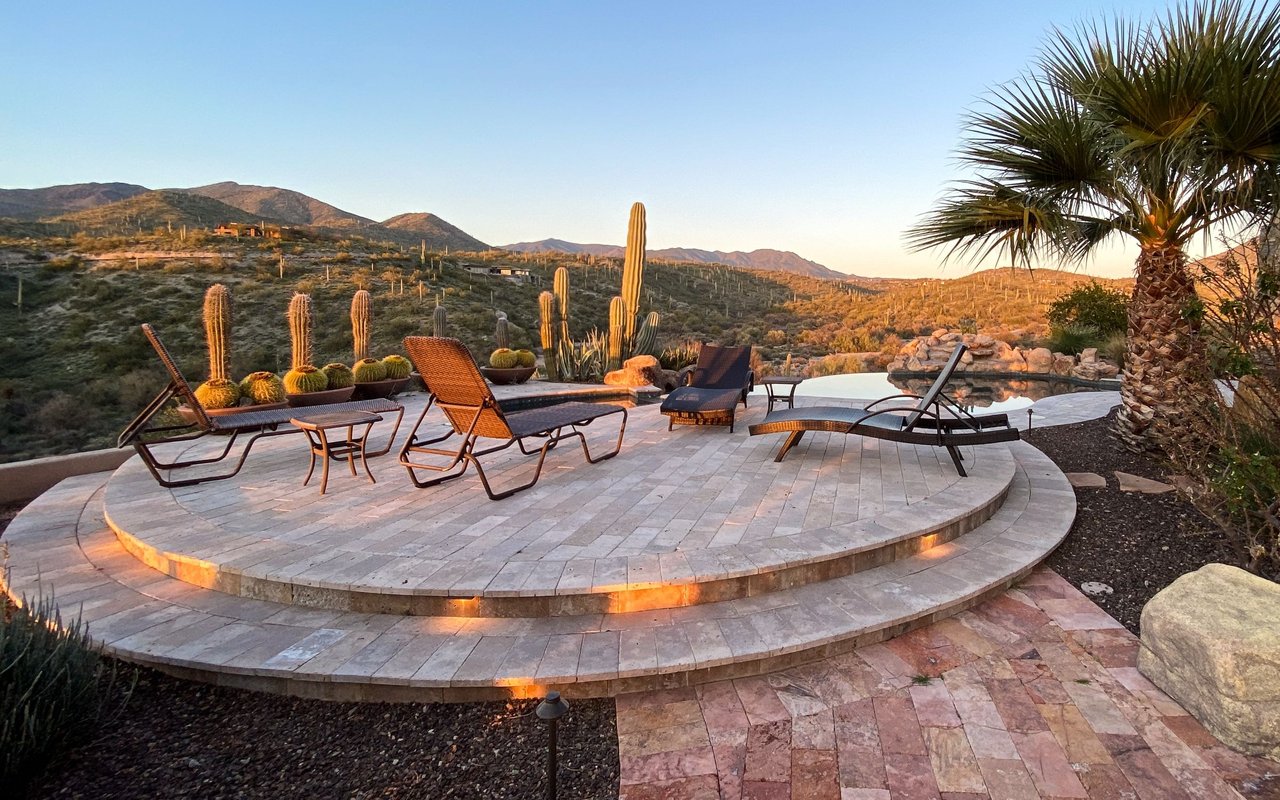
Catalina Foothills is shaped by more than price point or square footage. According to USGS research on the Catalina foothills, the area is a steep elevational transition zone between desertscrub and higher mountain ecosystems, with the transition around 1,200 meters, or about 3,940 feet, above sea level.
For you as a buyer, that helps explain why one location may feel dramatically different from another. Homes closer to the mountain front can differ from lower-lying, more arterial locations in slope, access, and views. When you visit, pay attention not just to the house itself, but also to driveway approach, road layout, elevation, and how the lot interacts with the surrounding terrain.
Understand the Catalina Foothills Climate
If you are moving from a cooler or wetter part of the country, climate adjustment is one of the biggest parts of the transition. The National Weather Service Tucson climate normals show an annual average high of 84.0°F, an annual average low of 57.3°F, and 10.61 inches of precipitation per year.
Summer is the most intense season. Normal highs reach 101.2°F in June, 100.2°F in July, 98.6°F in August, and 95.1°F in September. Rainfall also peaks in July and August, which means summer is not just hot, but also more weather-active.
For many out-of-state buyers, the best approach is to treat climate as a practical housing factor, not just a lifestyle note. Think about how heat affects your driving routes, outdoor spaces, move-in timing, and what you want from a home’s setting and access.
Monsoon Season Affects Daily Life
In Southern Arizona, summer also means monsoon season. The National Weather Service monsoon safety page says the season officially runs from June 15 through September 30, and Tucson averages 5.69 inches of precipitation during that period.
The main risks include thunderstorms, flash flooding, dust storms, lightning, and extreme heat. For relocation buyers, this is important because weather can affect roads, washes, outdoor plans, and power reliability. A home that feels easy and convenient on a mild spring day may feel different during a summer storm pattern.
If possible, plan at least one visit during a warmer or active-weather period. Seeing the area in different conditions can give you a more realistic sense of what daily life may feel like after the move.
Flood Risk Should Be Reviewed Early
Flood and drainage context deserve early attention in the Foothills, especially near washes, canyon mouths, or burn-affected areas. Pima County’s Bighorn Fire flood risk information notes that the fire increased flash-flood and mudflow risk in the foothills of the Catalina Mountains, and the county tracks post-fire flood risk in watersheds including Sabino, Ventana, Finger Rock, Canada del Oro, Pima, and Rooney.
The county also states that flood losses are not covered under normal homeowners insurance policies. That means if a property has meaningful drainage exposure, you should ask about flood maps and insurance options before making an offer, not after inspections begin. This one step can help you avoid both surprise costs and unnecessary stress.
Commute and Transportation Reality
Catalina Foothills offers regional access, but most households still rely heavily on a car. The Census reports a mean travel time to work of 22.0 minutes, which suggests many commutes are manageable, though convenience varies by address.
Transit options do exist, but they are specific rather than universal. Sun Tran route information notes that the 105X Foothills-Downtown Express links the Foothills with Sunrise/Swan, Banner University Medical Center, the University of Arizona, Pima County Court, and downtown. Sun Shuttle serves broader connection needs, but dial-a-ride service generally requires advance reservations made one to seven days ahead.
If your routine will include downtown Tucson, the university area, or a medical campus, location matters. During your search, it is worth mapping your likely destinations from each home you consider rather than assuming the entire Foothills offers the same level of convenience.
Plan a Smarter Research Trip
A well-planned scouting trip can make your relocation much easier. Based on the local climate pattern and monsoon timing, a practical approach is to visit once during a milder season and, if possible, again during summer conditions. That gives you a better feel for heat, traffic, road conditions, and drainage patterns.
Before you move from casual touring to serious decision-making, verify three property-specific items:
- The exact HOA or CC&R structure
- The parcel’s attendance boundary if that matters to you
- The flood or drainage context for the site
The Catalina Foothills Association area maps are a useful starting point for understanding how the broader area is organized. The association also provides CC&R and guideline resources, which can help you understand why governance and property expectations may differ from one section to another.
Build the Right Local Support Team
When you are relocating from out of state, good local guidance can reduce risk and save time. In a market with terrain changes, varied rule sets, and address-specific flood considerations, details matter.
A strong relocation process often includes a Foothills-focused buyer’s agent, a title or escrow team that can pull governing documents, a home inspector familiar with hillside and drainage issues, and an insurance professional who can quote flood coverage before closing. That kind of coordinated support helps you make decisions based on the property itself, not guesswork.
If you are preparing for a move to Catalina Foothills, working with a local advisor who understands the area’s micro-markets can help you compare homes with more clarity and confidence. For discreet, high-touch relocation guidance tailored to your goals, connect with Thalia Kyriakis.
FAQs
What should out-of-state buyers know about Catalina Foothills neighborhoods?
- Catalina Foothills is best understood as a collection of distinct submarkets, with differences in CC&Rs, HOAs, lot character, terrain, and access depending on the exact address.
How hot is summer in Catalina Foothills, Arizona?
- Tucson climate normals show normal highs of 101.2°F in June, 100.2°F in July, 98.6°F in August, and 95.1°F in September, so summer conditions should be part of your relocation planning.
What weather risks affect Catalina Foothills homes?
- During monsoon season, the main risks include thunderstorms, flash flooding, dust storms, lightning, and extreme heat, with added flood concerns in some burn-affected drainage areas.
Do Catalina Foothills buyers need to check flood insurance options?
- Yes, especially for homes near washes, canyon mouths, or affected watersheds, because Pima County notes that flood losses are not covered by standard homeowners insurance.
Is Catalina Foothills convenient for commuting around Tucson?
- It can be, but convenience depends on the property’s location, your regular destinations, and whether you plan to drive or use limited corridor-based transit such as the 105X express route.