Do you find yourself pausing at arched doorways, red tile roofs, or a perfect front porch swing? If so, Sam Hughes might already be calling your name. Many homes here were built from the 1910s through the 1950s, and they showcase styles that both look beautiful and work well in Tucson’s desert climate. In this guide, you’ll learn how to spot key architectural styles in Sam Hughes, what they mean for maintenance and renovations, and how to evaluate a listing with confidence. Let’s dive in.
Sam Hughes at a glance
Sam Hughes sits just east of the University of Arizona and grew steadily in the early to mid 20th century. Many houses retain original finishes, mature shade trees, and classic layouts with porches and detached garages. You will see details that fit Tucson’s Sonoran Desert climate, like thick stucco walls, shaded windows, and tile roofs. The neighborhood also benefits from active local preservation interest, which helps protect historic character.
Style guide: what you’ll see
Spanish Revival and Mediterranean
You will notice many homes with Spanish Colonial Revival or Mediterranean influence. Look for stucco walls, arched openings, and low-pitched roofs with red clay mission tiles or a flat roof concealed by a parapet. Wrought-iron grilles, colorful tile accents, and small courtyards are common. Interiors often feature plaster walls, tile or hardwood floors, and sometimes beamed ceilings. These elements are not just pretty. Thick walls, shaded porches, and courtyard plans also help with passive cooling.
Craftsman and Bungalow
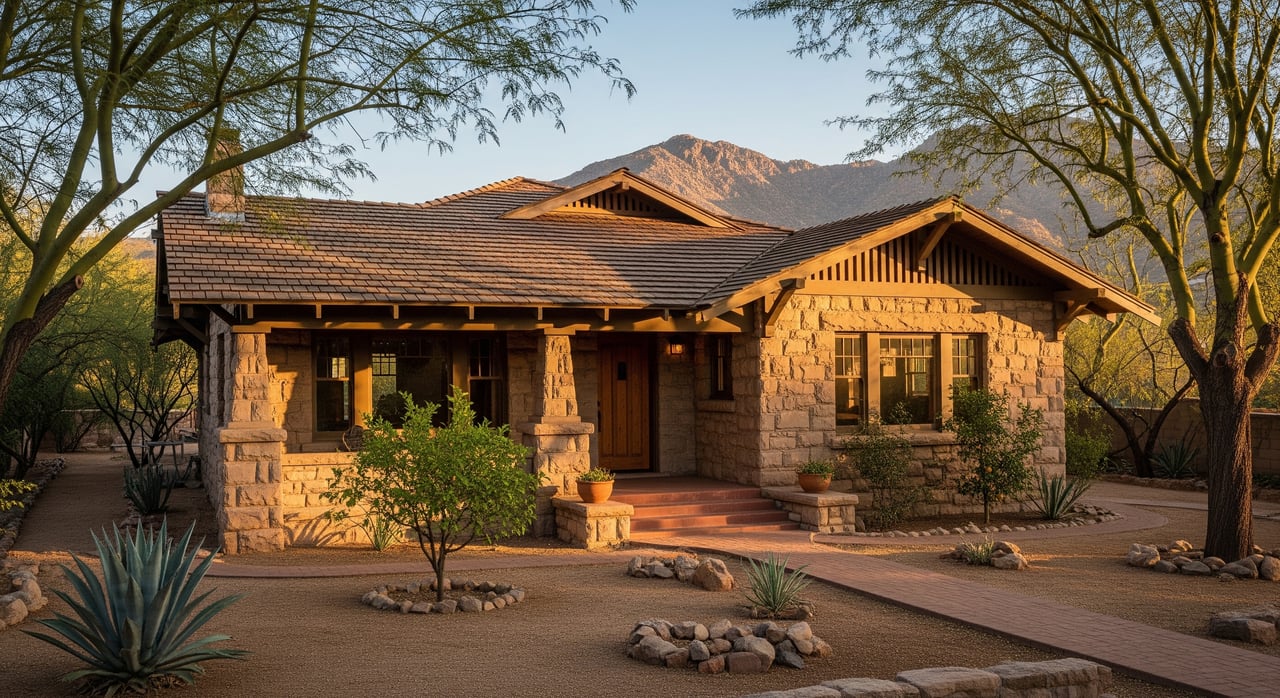
Craftsman-era bungalows show up throughout Sam Hughes, especially among earlier homes. Typical cues include a low to medium gabled roof with wide eaves and exposed rafter tails. A large front porch with square or tapered columns set on stout brick or stone piers is a hallmark. Inside, you may find built-ins like bookcases or benches, open but defined rooms, and generous wood trim. Exteriors range from wood siding to stucco.
Territorial and Territorial Revival
Territorial style in Arizona blends simple classical lines with regional masonry and adobe traditions. In Sam Hughes you may see rectilinear forms, flat or low-pitched roofs, and restrained ornament. Details like simple pediments or lintels over doors and windows add a crisp profile. This style often overlaps with other local influences, creating Tucson-specific hybrids.
Mid-century influences
Postwar additions and infill from the 1940s through the 1960s add a mid-century thread to the neighborhood. Expect low horizontal profiles, ranch layouts, larger single-pane or picture windows, and an emphasis on patios and indoor-outdoor living. Roofs may be flatter with low slopes, and original mechanical systems sometimes date to the mid 20th century.
Hybrids and Tucson twists
Do not be surprised if a home blends styles. A bungalow form may wear stucco and red tile, or a Territorial profile might borrow Mediterranean arches. Local builders often adapted national trends to climate, materials, and budget, which makes Sam Hughes architecture both distinctive and varied.
Why the design fits the desert
Sam Hughes homes were shaped by Tucson’s hot, dry climate. Stucco over masonry offers thermal mass that moderates heat swings. Deep porches, recessed openings, and courtyard plans create shade and capture breezes. Clay tile roofs shed heat well and stand up to the sun. Even mid-century picture windows often face shaded patios to reduce direct exposure. When you see these features, you are seeing design choices that make daily life more comfortable here.
Maintenance by style and material
Stucco and masonry
Cracks, bulges, or mismatched patches in stucco can let moisture into the wall assembly. Plan for regular inspections, quick repairs to hairline cracks, and attention to roof drainage and site grading. Poor re-stuccoing can hide problems or create a patchwork look, so ask for permits and contractor records for major work.
Clay tile roofs
Clay tiles last a long time, but individual tiles can break and underlayment can age out. Look closely at flashing around chimneys and valleys and ask about underlayment age. Budget for periodic tile replacement and professional inspections, especially after storms.
Wood details and porches
Bungalows often feature exposed rafters, wood columns, and porch structures. In Tucson, wood can suffer from sun exposure, rot from irrigation overspray, or termite activity. Maintain paint and finishes, schedule termite inspections, and watch for settling at porch piers.
Flat and low-slope roofs
Some Territorial and mid-century homes use flat or low-slope roofs that can pond water if drainage is poor. Membranes may need more frequent maintenance than steep roofs. Regular roof checks and attention to scuppers and downspouts pay off here.
Original windows
Historic wood windows add charm but may be single-pane with tired hardware. Many owners repair and weatherstrip rather than replace, which preserves character. Storm panels or interior inserts can improve comfort while keeping original profiles.
Systems, structure, and smart upgrades
Electrical and plumbing
Early 20th-century homes may have older wiring, limited circuits, or galvanized supply lines. Plan for modern panels, grounded outlets, and plumbing updates as needed. Ask for documentation of any prior upgrades and confirm they were permitted.
Insulation and HVAC
Many historic homes started with little to no insulation and relied on passive cooling. Modern HVAC may have been added later. Look for thoughtful ductwork routing and condenser placement that minimize visual impact. Roof and wall insulation upgrades can improve comfort if done with sensitivity to historic fabric.
Foundations and crawlspaces
Foundation types vary, including shallow footings, pier-and-beam, or masonry. Watch for uneven floors or stepped cracks that could indicate settlement. Crawlspaces can have ventilation or pest issues in the desert, so ask your inspector to take a careful look.
Preservation and renovation balance
Front porches, original windows, built-ins, plaster, and artisanal tile are character-defining elements in Sam Hughes. Removing or replacing them can reduce value for buyers who love historic homes and could conflict with local guidelines. The best remodels respect these features while updating kitchens, baths, and systems for daily life.
Buyer checklist for showings
Exterior cues
- Roof type and condition, including underlayment age and flashing at chimneys or valleys.
- Stucco condition, especially cracks, bulges, or staining under rooflines.
- Porch structure, columns, and pier integrity.
- Window material and operation, signs of rot, or mismatched replacements.
- Grading and drainage away from the foundation.
- Detached garages or alley access, common with older homes.
- Mature trees that add shade but may affect foundations or walks.
Interior cues
- Floor levelness and the difference between hairline plaster cracks and structural movement.
- Ceiling stains that suggest past or current leaks.
- Age and location of HVAC, water heater, and electrical service panel.
- Presence and condition of original built-ins, tilework, wood trim, and plaster.
Smart questions to ask
- Which original features were preserved, and which were altered or replaced?
- Are there permits and invoices for roof, HVAC, electrical, plumbing, or foundation work?
- Any known moisture, termite, or structural issues, and is there a pest report?
- Do local historic design guidelines apply to this property, and has it been through design review?
Inspections and specialists
- Start with a standard home inspection.
- Add a roof specialist for clay tile or flat roofs.
- Engage a structural engineer if you see settlement signs.
- Order a termite and pest inspection.
- For adobe or historic masonry, consult contractors with region-specific experience.
Permits and historic rules
Sam Hughes has an active neighborhood association and Tucson maintains historic preservation processes. If a property sits in a designated historic district or conservation overlay, exterior changes may require design review or permits. Some properties that are listed on the National Register or designated locally could be eligible for certain tax incentives or grants for qualified rehabilitation. Always verify current rules with the City of Tucson Historic Preservation Division and confirm that past work was properly permitted. Unpermitted work can affect financing and resale.
Moving forward
Sam Hughes offers the best of Tucson tradition, from arched entries and beamed ceilings to shaded courtyards and porch culture. When you understand the style you are buying, you can honor its character and plan upgrades that work in our desert climate. If you want a second set of eyes on a listing, or you need trusted inspectors and craftspeople, you deserve guidance that is both local and discreet.
For confidential, high-touch help buying or selling in Sam Hughes, connect with Thalia Kyriakis.
FAQs
What makes Sam Hughes homes “historic” in Tucson?
- Many homes were built from the 1910s to the 1950s and retain original features, with active local interest in preserving neighborhood character.
Which architectural style is most common in Sam Hughes?
- You will frequently see Spanish Revival and Mediterranean influences, along with Craftsman bungalows and Territorial variants, plus some mid-century infill.
Are flat or low-slope roofs a concern for buyers?
- They can perform well with proper drainage and maintenance, but ponding and membrane wear mean you should budget for regular inspections and care.
Can I replace original wood windows in a historic home?
- Many owners repair and weatherstrip to preserve character, or use storm inserts; if design review applies, window changes may require approval.
How do historic rules affect a remodel in Sam Hughes?
- If the home is in a designated district, exterior changes may need design review and permits; verify requirements with the City of Tucson before work begins.